


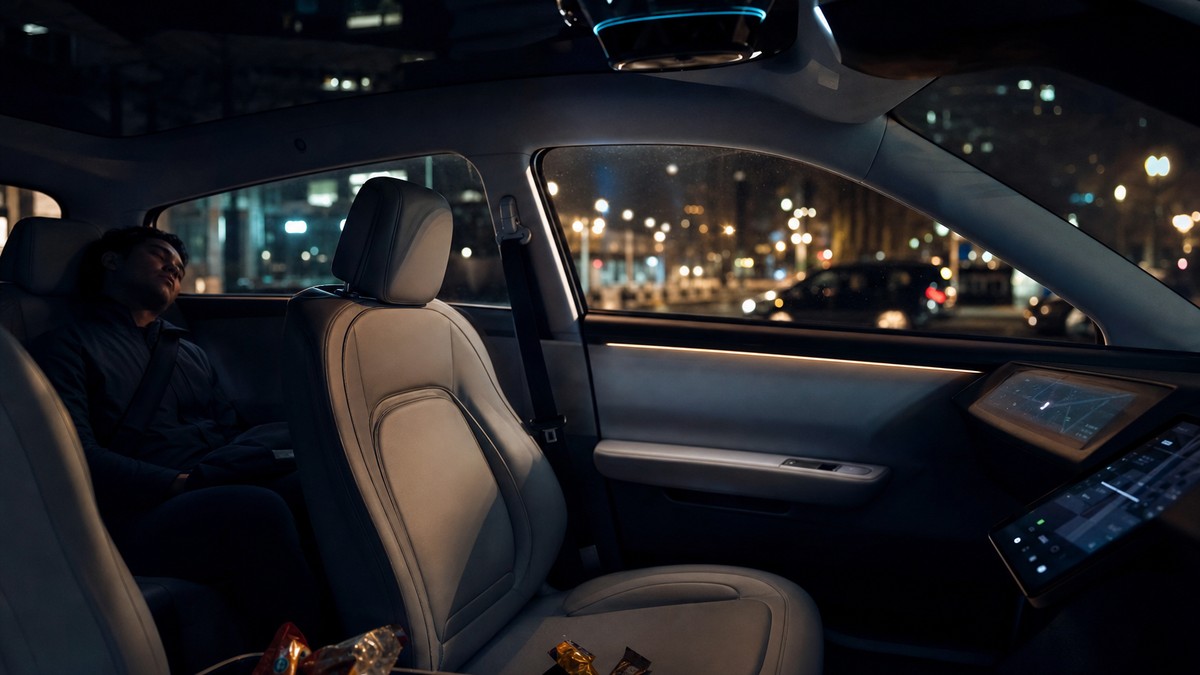
Take the human driver out of the front seat and something strange happens to the people in the back. Riders relax a little too much, forget they are being watched, and treat these quiet driverless cars like their own living rooms. The results range from funny to genuinely alarming.
- First responders in Austin coined the term “sleepers” for passengers who doze off and cannot be woken
- A San Francisco rider gave birth in the back seat of a Waymo last December while heading to the hospital
- Companies now charge cleaning fees and watch cabins with interior cameras to keep the messes in check
Nap Time Turns Into a 911 Call
Without someone up front to make small talk or glance in the mirror, a lot of riders simply nod off. That sounds harmless until you factor in what happens next. When a passenger will not respond, a remote assistant first tries yelling through the car’s speakers. If that fails, the standard move is to call 911, and arriving officers have to assume the worst.
Austin has seen this so often that first responders gave the pattern a nickname. In just the first nine months of service there, 99 calls came in for sleeping riders. The reality is usually a lot less scary than the dispatch suggests. Only about 3% of those calls end with someone actually being taken to a hospital. One Los Angeles rider dozed off after a birthday party and woke up to firefighters opening the door, roughly an hour after his six-minute trip should have ended.
Real Emergencies Behind the Wheel-Less Cars
Not every incident is a false alarm. People have medical emergencies in these cars, and the companies have had to build systems for it. Waymo told Senator Ed Markey in written testimony this past February that it keeps a team of US-based agents whose job is coordinating with first responders during incidents. Riders can dial 911 themselves or reach Waymo’s remote staff through the in-car tablet. Zoox takes a similar approach, with an emergency call button riders can hit above their seat, on the screen, or in the app to reach a support rep.
Then there is the delivery that made headlines. Last December, a passenger in San Francisco on her way to the hospital gave birth in the back seat of a Waymo. The car detected unusual activity, a remote assistant checked in, and first responders were called. It counted as at least the second baby born in a Waymo.
Spills, Trash, and the Occasional Dog Poop
The grosser side of all this is the mess. With nobody physically present to keep riders honest, spilled drinks, dropped food, vomit, and worse end up left behind for the next person to find. Riders have opened doors to trash, abandoned alcohol, and stray containers rolling out from under the seats. On one recent ride a BuzzBallz tumbled out from beneath a seat, though frequent riders still rate the robotaxis as cleaner than most cabs or rideshares they have taken.
To fight the grime, all three major players lean on incentives and cameras. Tesla charges $50 for a moderate mess like a food spill, and $150 for smoking or leaving behind bio-waste. Waymo runs on a bit more trust, asking riders to report their own spills for a $50 cleaning fee. That number climbs to $100 if the next passenger finds the mess first, and repeat offenders pay more. Every cabin carries interior cameras, so the cars are always keeping an eye on who is inside.
Sometimes the response is surprisingly gracious. One rider realized she had stepped in dog poop right before her car pulled up. She hit the call button, reported it, and was told the vehicle would head back to its depot after her ride. She was not charged a cent.
What Riders Should Keep in Mind
Driverless cabs are spreading fast across cities in the US and beyond, and the tech mostly works. The wild card is us. Set an alarm if you tend to sleep, clean up after yourself, and know where the help button is before you actually need it. Treat the car a little better than you might treat a stranger’s couch, and everyone riding after you will be grateful.
 David Martin