


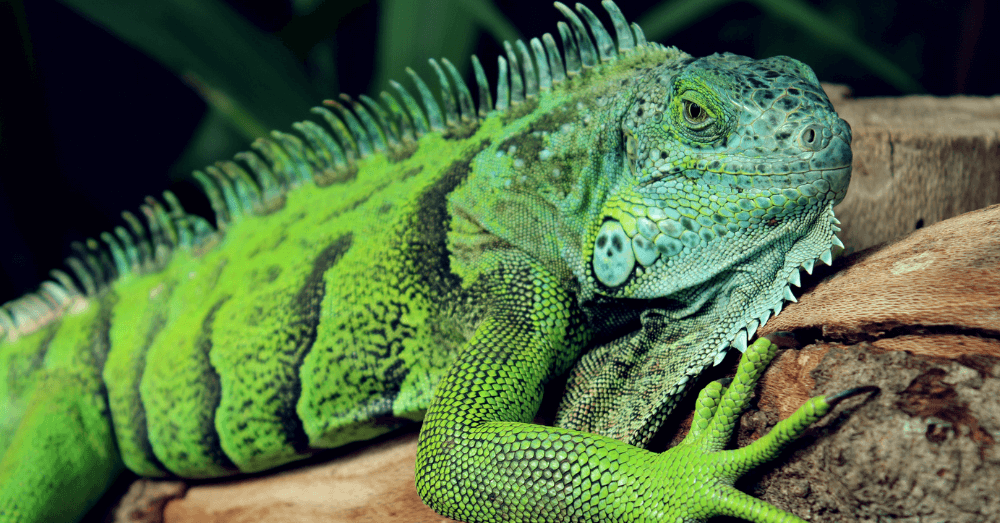
When South Florida’s temperatures plunged to the mid-30s in early February 2026, something bizarre happened. Green iguanas, stiff and motionless from the cold, started dropping out of trees. While most people simply watched and wondered, a 23-year-old Fort Lauderdale content creator named Gray Davis had a different reaction: he picked one up and made tacos.
- Davis’ TikTok video showing how he made iguana tacos has gone viral with over 20 million views.
- The iguana he used contained roughly 20 eggs, which he also incorporated into the meal.
- Amid the cold blast, over 5,000 invasive green iguanas were removed under a recent executive order that let people take cold-stunned reptiles to select FWC offices.
Why Iguanas Fall From Trees in Florida
If you’ve never seen it before, the idea of lizards raining from the sky sounds like fiction. But in Florida, it’s become something of a winter tradition. Green iguanas are unable to generate their own body heat and depend on warmth from outside. As soon as the thermometer drops below around 10 degrees Celsius, they become lethargic. Between around 4 and 7 degrees, the cold-blooded reptiles enter a stunned state of temporary, survival-mode paralysis. If they are caught in this state in trees, they lose their grip and fall to the ground.
While they may appear lifeless, the reptiles are often temporarily paralyzed, not dead. Miami saw its coldest February 1 on record at 35 degrees Fahrenheit, with wind chills down to 26 degrees. That was enough to send iguanas tumbling across the region.
Green iguanas are originally from Central and South America, but since the 1960s they have become an invasive species in the suburbs of Miami, Fort Lauderdale, and Palm Beach. It is believed they were introduced via cargo ships and the pet trade. The estimated population has now grown to one million animals. Even people from much colder climates, like Richmond, Indiana, might be fascinated to learn that an iguana falling from a palm tree is a regular wintertime event in the Sunshine State.
The Recipe That Broke the Internet
Davis explained in his video that during cold fronts, “a lot of people will go out and collect them to help control the number in the population.” He added that green iguanas are often referred to as “chicken of the trees.” So instead of tossing his find, he brought it home and got cooking.
Davis simmered the iguana meat with onion, garlic, bay leaf, and salt. The eggs (all 20 of them) were soft-boiled and blended with avocado, garlic cloves, olive oil, salt, and lime to make a sauce. After that, he crisped the meat in a pan with his seasonings and built the tacos.
The finished tacos were topped with pickled red onions, jalapeño, and cilantro. Davis also attempted to preserve the iguana’s skin to minimize waste. His philosophy? Use everything you can and turn the rest into crab trap bait.
Davis says the flavor is mild and clean. The texture is similar to dark chicken, so it takes on seasoning really well. In taco form, most people are surprised by how familiar it tastes.
Why the State Encourages Iguana Removal
Davis actually has a real ecological reason behind the content. Green iguanas are an invasive lizard in Florida that cause real damage to native wildlife and property across the state. Special regulations under Executive Order 26-03 gave members of the public a chance to remove green iguanas during this unusual cold-weather event and bring them to the FWC, no permit required.
They chew on power lines, damage gardens and farms, attack native species, and have been described with frustration by residents who deal with them daily. A single female can lay up to 80 eggs a year. That’s why Davis pointed out that by removing one iguana carrying 20 eggs, he potentially prevented dozens more from hatching in the spring.
Combined with other private services, the estimated number of frozen iguanas removed during this cold snap reached about 8,000.
Would You Eat an Iguana Taco?
The internet, as always, had strong feelings. One commenter wrote, “Sorry you lost me at blending 20 iguana eggs in a blender to dip their mother’s body into.” Others took a more practical view. One user wrote, “Everybody is hating but this is the definition of ethical meat eating.”
Davis later posted a follow-up about ethical eating and acknowledged that not everyone wants to try it. “I totally get if you just won’t eat an iguana taco; everybody has their limits, that’s fine,” he said, adding, “I would argue that it’s the most ethical taco you could possibly have.”
In the Caribbean, where iguanas are native, they are sometimes referred to as “pollo de los árboles,” or chicken of the trees. Iguana eggs are primarily composed of yolk with very little albumen, making them a handy omelet ingredient, and iguana meat is also high in protein as well as omega-6 and omega-3 fatty acids.
Whether you find the whole thing fascinating or stomach-churning, it’s a story that only Florida could produce. A cold snap, a falling lizard, and one guy with a frying pan turned an ecological nuisance into a viral meal.