


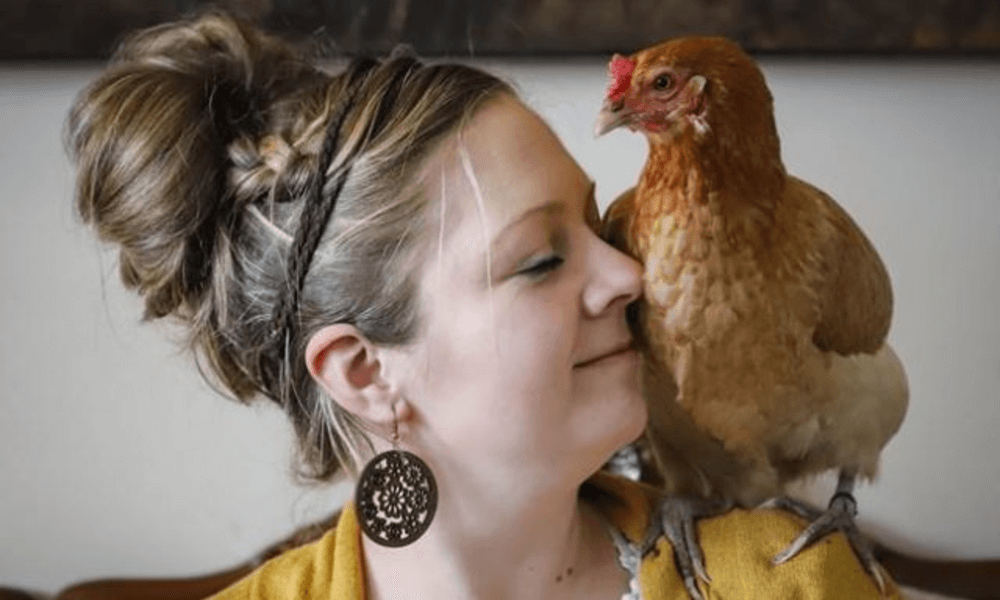
Most people think of dogs or cats when they picture a professor’s emotional support companion. Sonia Kong, a psychology professor at the University of Northern British Columbia, went in a completely different direction. She adopted a chicken. And not as a passing novelty, either. The 11-month-old bird, named Saturday, has become her constant companion, her co-worker during long research sessions, and the unlikely muse behind an international study on how pets affect teenagers around the world.
- Kong named her pet chicken Saturday after the day of the week she adopted the bird.
- Saturday often keeps Kong company while she works, perching on her leg during long research sessions, and Kong says the chicken seems to sense when she’s feeling sad.
- Kong and colleague Tracy Wong from the Chinese University of Hong Kong are studying how relationships with pets shape adolescents’ social and emotional development in different cultural contexts.
How Saturday Became Part of the Family
Saturday is 11 months old and was picked up from a farm outside Prince George, British Columbia. Kong says she decided to get a chicken as a pet because she had chickens and ducks as a child and has loved them ever since. There’s a childhood connection driving this bond, and it shows in how Kong talks about her feathered friend.
According to Kong, Saturday appears to notice when she is upset. She recalled a moment when she was crying and the chicken quietly stayed beside her, watching her closely. Kong said the gesture felt meaningful and comforting. That kind of attentiveness from a bird might surprise people who’ve never spent time around chickens, but Kong isn’t the only one who’s noticed this trait.
Research shows chickens can feel a range of emotions, both their own and those of the flock around them. They’re extremely intelligent animals, and each one has its own personality. Scientists have also found that hens have the basic building blocks of empathy. Mother hens, for example, show signs of anxiety when their chicks are in distress.
The Custom Diaper and Errands Around Town
One of the most charming details about Kong and Saturday’s relationship is the logistics. To make it easier to bring the chicken into public spaces, Kong designed a small diaper so the bird can travel with her around the city. That’s right. Saturday wears a custom diaper and joins Kong on everyday errands around Prince George. The two are now inseparable.
Saturday will sit on Kong’s leg or lay beside her when she is working. Picture grading papers with a chicken dozing on your knee, and you’ve got a pretty good snapshot of daily life for this professor. Since getting Saturday, Kong says she’s come to realize how intelligent chickens can be.
From Pet Owner to International Researcher
Kong’s relationship with Saturday has shaped her professional work, too. Kong is conducting an international study with colleague Tracy Wong, an assistant professor at the Chinese University of Hong Kong, about how pets affect the social and emotional development of teens across cultures.
Kong says that in Western cultures pets are highly valued, but in many other cultures around the world they are used for specific purposes like protection, pest control, or food. Her team wants to see whether those cultural differences influence how spending time with pets affects adolescents from different backgrounds.
The research is being conducted through an online survey where adolescents are asked questions about their thoughts and feelings related to pets. Kong says they have begun collecting data in Hong Kong and are now trying to find more participants in Canada.
Kong said her parents are still adjusting to the idea of her keeping a chicken as a pet. They have jokingly asked whether she plans to eat Saturday, but Kong makes it clear the bird is a companion animal. She noted that reactions like her parents’ reflect how differently people view animals depending on where they grew up. That family dynamic is exactly the kind of cultural contrast her research is trying to understand.
Why Emotional Support Chickens Are Gaining Fans
Kong’s story may sound unusual, but the concept of a professor having an emotional support chicken is part of a growing trend. Searches for emotional support chickens are up 80%. About 19% of millennials and 18% of Gen Z favor chickens as emotional support animals.
The gentle clucking and predictable behavior of chickens can have a calming effect on individuals with anxiety or stress. Compared to larger animals, chickens are relatively easy to care for, making them an option for a wider range of people. Emotional support chickens are also far more affordable than other therapy pets like dogs and cats. Each baby chick costs $1 to $5, while pullets or young hens who have started laying eggs cost between $15 to $25 each, and basic needs like feed and medical care are cheaper too.
Saturday Could Change How We Think About Pets
Kong’s bond with Saturday is a good reminder that comfort and connection can come from the most unexpected places. A shy yellow chicken from a farm in northern British Columbia has become a daily source of emotional support, a research inspiration, and an internet sensation. As Kong’s study continues to gather data across continents, Saturday will likely be right there beside her, perched on her leg while she works through the results. And honestly? That sounds like a pretty good lab partner.
 Sarah Johnson
  David Martin